

The Toronto Brief
Friday
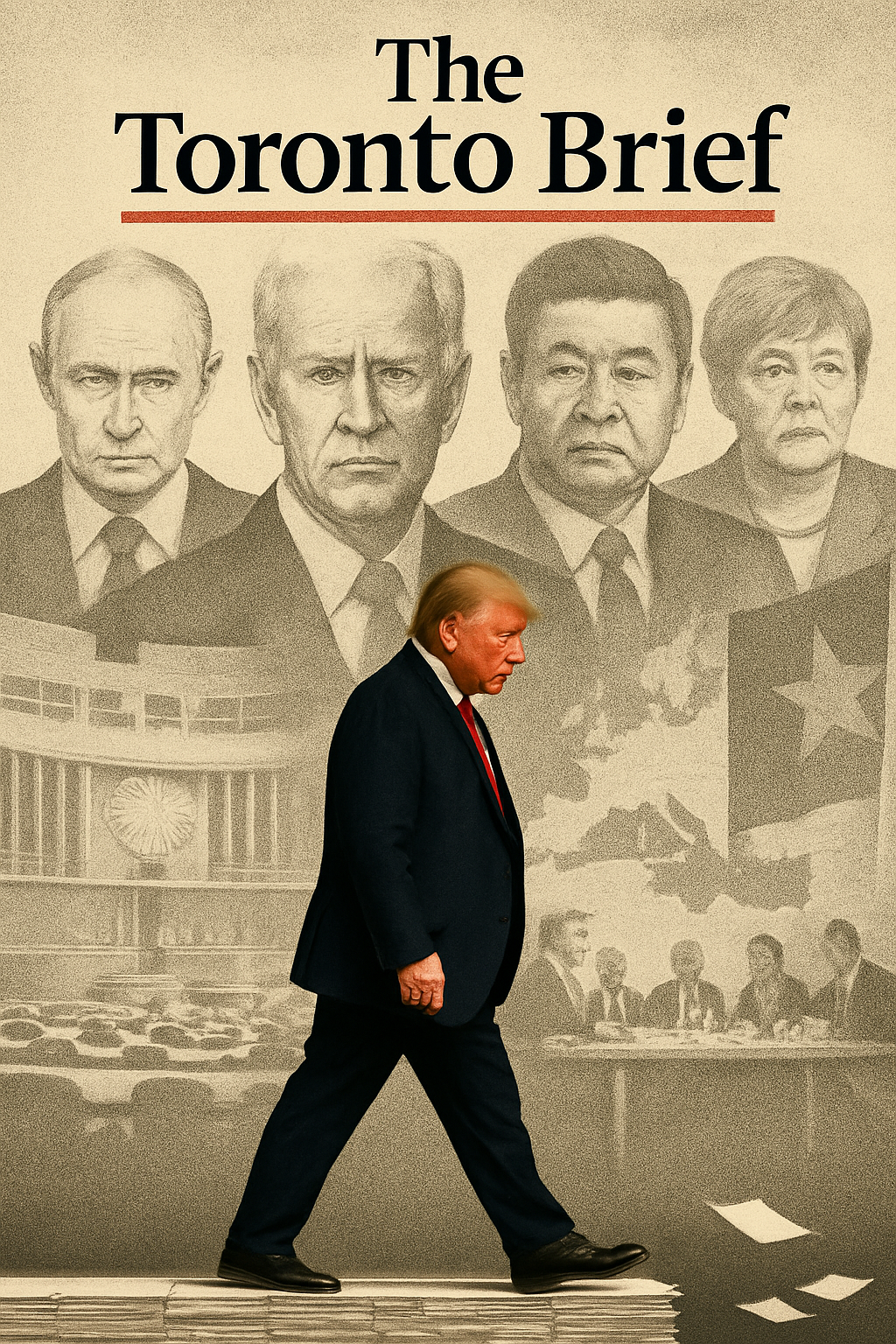
Trump pushes Ukraine to accept Russia-backed peace deal by Christmas, Signalling G7/NATO division risk
The December 10 reports indicating direct U.S. pressure on Kyiv to accept a Russia-backed armistice by Christmas represent the definitive fracture of the G7’s unified frontage established in 2022. This development is not merely a diplomatic acceleration; it is the precise moment where great power calculus explicitly supersedes the sovereignty of the frontline state. The move signals that the operational timeline for Western support has decoupled from Ukraine’s strategic objectives, fundamentally altering the risk calculus for every mid-sized NATO member. The stakes are no longer just about territorial control in the Donbas, but the validity of the "as long as it takes" doctrine that has underpinned Western cohesion for three years.
Functionally, this maneuver replaces the consensus-based alliance model with a realist imposition of timeline constraints driven by Washington's domestic imperatives. The mechanism at play is the leverage of indispensable aid: by conditioning future lethality on immediate concessions, the U.S. executive is reasserting the primacy of the guarantor over the guaranteed. This effectively converts security assistance from a cooperative tool of collective defense into a coercive instrument of diplomatic compliance. It reveals a principal-agent misalignment where the agent (Ukraine) bears the existential risk, but the principal (the U.S.) retains the discretion to terminate the conflict based on external political return.
The blast radius of this shift extends well beyond the immediate theater of war. If G7 security guarantees are revealed to be time-bounded rather than outcome-based, the institutional credibility of NATO deterrence effectively collapses for peripheral members. For Ottawa, this necessitates an immediate, uncomfortable re-evaluation of reliance on U.S. security umbrellas; if Washington can force terms on a combat-hardened partner like Ukraine, the assumptions underpinning Canada’s defense commitments are significantly more fragile than current policy admits. This creates a permission structure for adversaries to simply outwait Western election cycles rather than engage in genuine negotiation.
We are now witnessing the collision between the theoretical sanctity of borders and the hard limits of Western political will. The uncertainty is whether this pressure forces a genuine, sustainable cessation of hostilities or simply incentivizes Moscow to regroup while Western unity disintegrates. The institutional question for Canadian observers is clear: Does the G7 fracture deepen into a permanent realignment of European security architecture, or will European capitals attempt to fill the deterrence vacuum left by Washington’s pivot?.
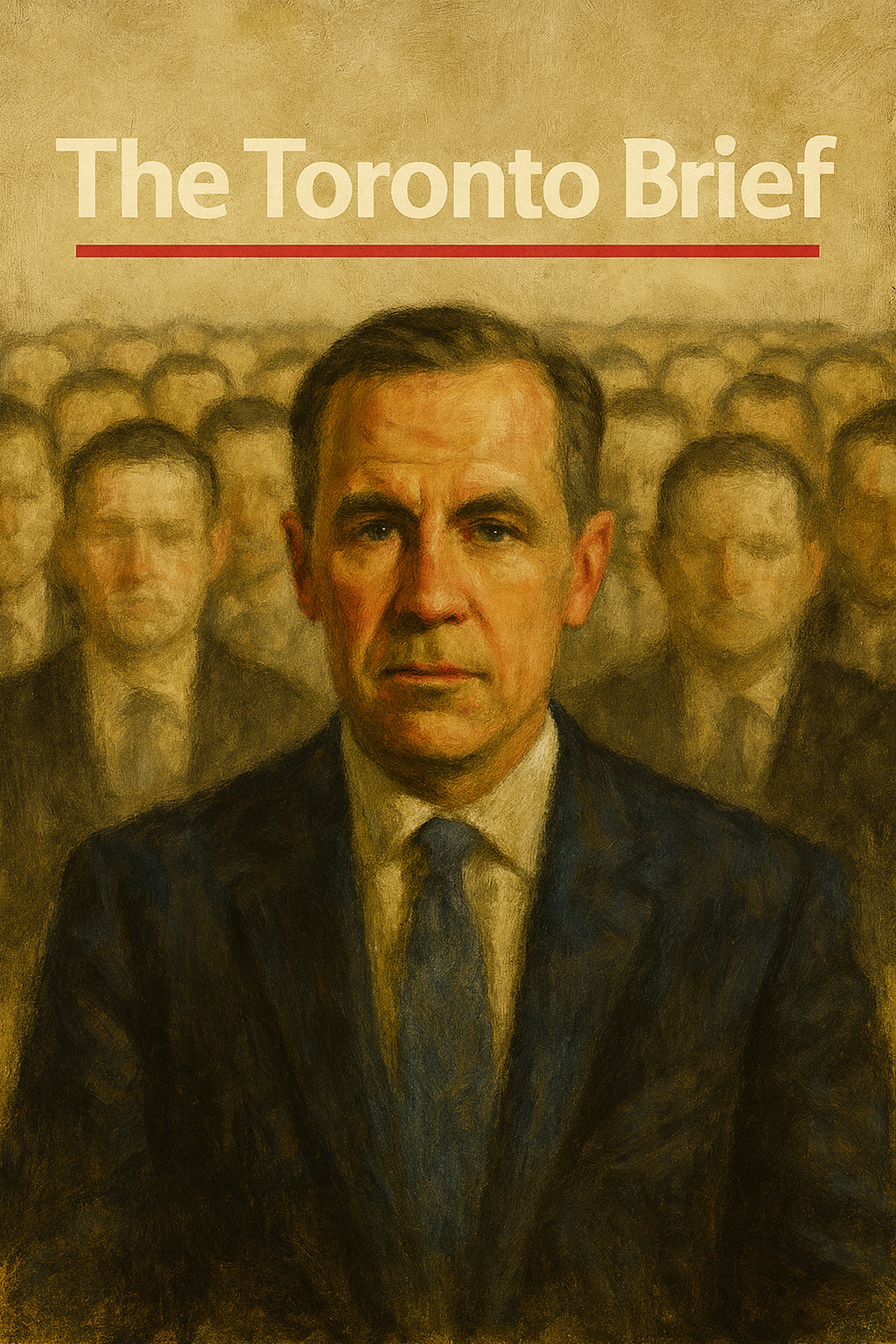
Ottawa to embed 50 private-sector leaders inside federal government for oversight and project delivery roles
Ottawa’s initiative to embed 50 private-sector executives directly into federal oversight and delivery roles marks a distinct departure from traditional third-party consulting models. By granting operational authority rather than just advisory capacity, the government is issuing a tacit admission that the existing bureaucratic machinery possesses insufficient velocity to execute priority mandates. This is not a routine staffing adjustment; it is a profound stress test of the "public-private" hybrid governance model, aimed at bypassing the implementation gap that has plagued recent federal infrastructure projects.
The institutional logic here attempts to override the risk-averse inertia of the permanent public service by injecting private-sector velocity directly into the decision loop. However, this creates an immediate friction between two distinct operating systems: corporate leaders conditioned on efficiency metrics are being inserted into a statutory environment designed for procedural equity and risk mitigation. The mechanism relies on the hypothesis that external "shocks" to the system can override the path dependency of bureaucratic culture, though it introduces significant ambiguity regarding conflict of interest frameworks and the chain of command between elected officials and appointed operators.
If successful, this experiment creates a precedent for a "hybrid state" model where delivery capability is permanently outsourced to embedded actors, potentially accelerating procurement timelines. However, the trade-off is a potential hollowing out of internal state capacity and a crisis of legitimacy if accountability lines blur during operational failures. This approach risks creating a two-tier public service where execution power resides with unelected corporate appointees while career civil servants are relegated to compliance management, demoralizing the very institutions required for long-term governance stability.
The government has effectively wagered that the risk of operational friction is lower than the political cost of continued delivery stagnation. We do not yet know if the federal immune system will reject these external implants or if they will successfully rewrite the operational code of the departments they inhabit. The critical indicator to watch is: Will these 50 embeds be empowered to override procedural bottlenecks, or will they be absorbed and neutralized by the very bureaucracy they were hired to disrupt?.