

Make it stand out.
The Toronto Brief Monday News

Canada’s Top Diplomat Says Ottawa Working Fast to Advance India Trade Deal
After two strained years, Canada and India are suddenly accelerating toward a high-ambition trade deal—a shift that caught many observers by surprise. On November 24, Foreign Minister Anita Anand signaled that Ottawa is now “moving swiftly” to rebuild diplomatic momentum with New Delhi. The announcement comes after a freeze initiated in 2023, when bilateral tensions derailed negotiations and cast doubt on whether the two governments could salvage a long-term economic partnership.
What’s changed? In short: strategy. Canada is re-wiring its trade policy to reduce exposure to the U.S. economy, and India—now the world’s fastest-growing major market—has become impossible to ignore. For Ottawa, diversification is no longer a talking point; it's becoming an operational necessity.
India, for its part, is balancing its relationships between Western partners and its own regional interests. A renewed agreement with Canada fits neatly into that calculus, offering access to resources, education networks, and technology collaboration—areas where Canada still holds global leverage.
If negotiations truly advance at the pace Anand suggests, Canada could unlock one of its most important trade corridors of the next decade. But the real test will be whether both governments can look past recent frictions and build a framework that supports shared economic and geopolitical interests in a world moving quickly toward multipolar realities.
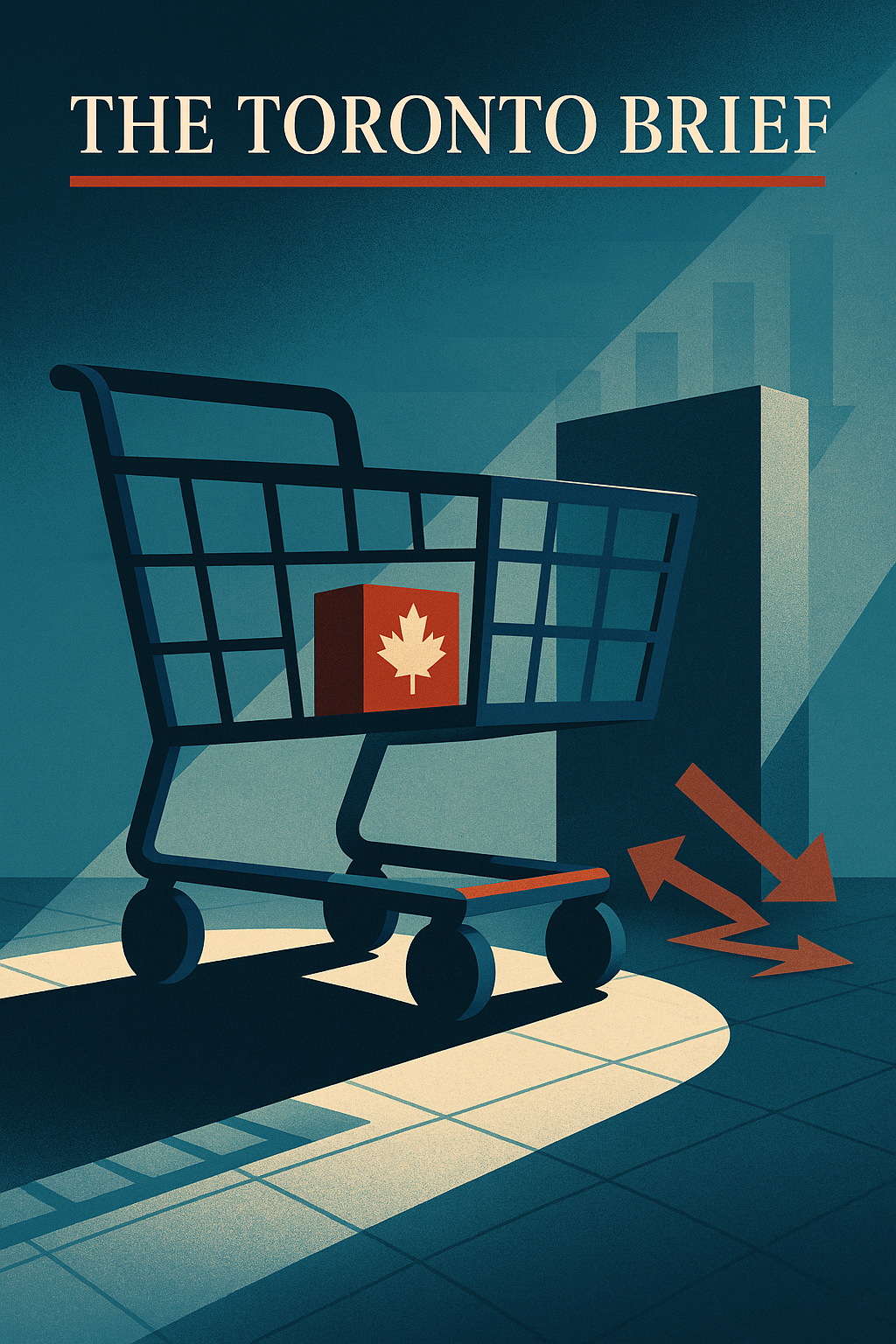
U.S. Trade Deficit Drops Nearly 24% in August as Canadian Concerns Mount
New U.S. data released November 24 revealed that America’s trade deficit shrank by nearly 24% in August—an unusually sharp drop driven by declining imports across multiple categories. On paper, that sounds like good news for Washington. But for Canada, the story reads a little differently.
Imports from Canada were among those falling, not because demand collapsed outright, but because tariffs, supply-chain disruptions, and shifting industrial policies are reshaping cross-border trade flows. When U.S. import demand softens, Canadian exporters feel it almost immediately: fewer orders, slower production, tighter margins, and cautious investment sentiment.
The trend also reinforces a broader signal that many analysts have been sounding for months: North America's economic rhythm is decoupling from what it looked like pre-2020. The U.S. is increasingly leaning into protectionist incentives, industrial reshoring, and domestic supply-chain resilience. Canada—still sending roughly 70–75% of its exports south—risks absorbing the downside of those shifts without enjoying proportional upside.
For policymakers and Canadian businesses, this moment isn’t a crisis—but it is a warning shot. A 24% shift in the U.S. deficit isn’t just a statistical blip; it reflects an evolving economic environment where Canada must diversify faster or remain vulnerable to forces entirely outside its control.